

Full video on Bilibili
Writing page does not support direct embed yet; open externally.
https://www.bilibili.com/video/BV1FFRQB2Eqw/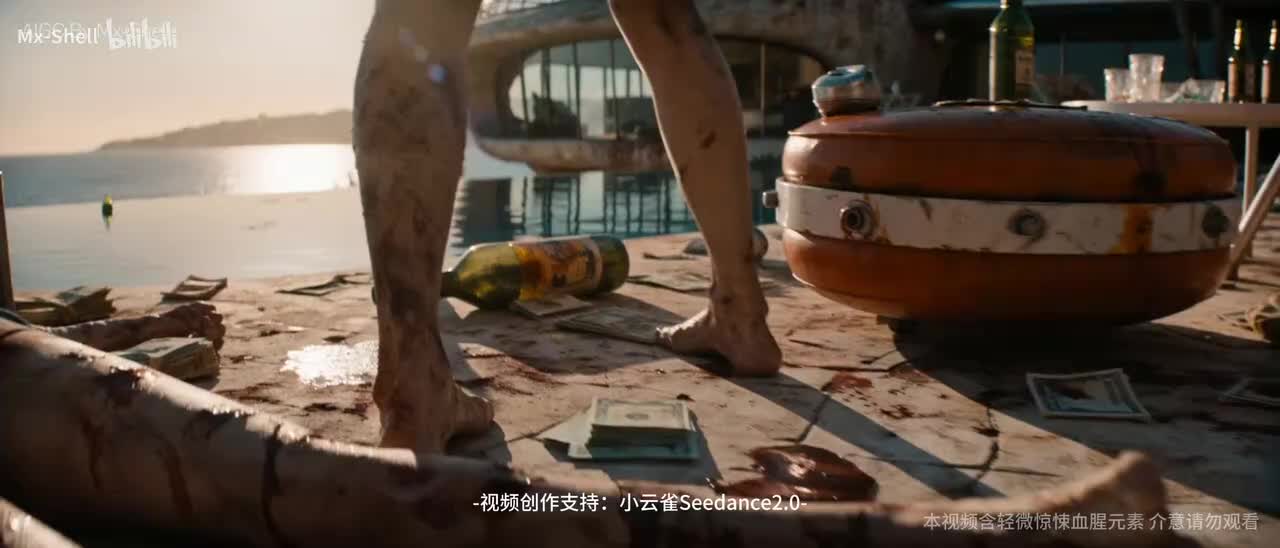
Quick answer first: this is not a single prompt operation. It is a production system for AI filmmaking: beat planning, reference locking, short-shot iteration, then manual continuity and polish.
Step 1 is story logic, not visual decoration. A 10-second loop works if each beat has a clear objective: hook, pressure, response, reversal, resolution. Without this, generative clips become stylized fragments.
Step 2 is identity locking. Seedance2 is strong at multimodal fusion, but character drift still happens. Reusing a stable reference image (for example `@image1`) across shots is critical for consistency.
Step 3 is split prompt authority. Separate prompt intent by role: character action, camera move, scene state, audio rhythm. This is the practical way to avoid instruction collisions in one long text.
Step 4 is shot chunking. Seedance2 commonly works in short windows like 4–15s. Generate 4–6s test clips first, then keep only the shots that pass continuity and rhythm checks.
Step 5 is audio-first rhythm control. If audio-visual generation is truly joint, the pacing of movement can invert the tone instantly. For action-oriented shorts, set cadence early and verify it before final merge.
Step 6 is manual stabilization. Very strong AI output can still fail on transitions, timing, and perspective continuity. The missing piece is almost always a human correction pass.
Step 7 is cost traceability. Keep a change log: prompt, seed, reference assets, run count, and reason for each keep/drop decision.
A practical minimum pipeline:
1) Draft 8-12 beats; 2) lock references; 3) generate 4-6s test clips; 4) keep style/seed stable and run A/B; 5) audit continuity; 6) merge sequence; 7) color, audio, and subtitle pass; 8) targeted manual fixes only.
Chinese prompt scaffold (copy and localize):
Duration 4-6s; Subject: @image1 stable survivor character; Camera: low-angle push + short dolly; Lighting: cold backlight with metallic contrast; Motion: decisive directional movement; Audio: industrial ambience + hard-beat percussion; keep no hard cut and preserve continuity at seams.
English prompt scaffold:
Duration 4-6s; Subject from @image1 must remain consistent; camera move low-angle forward tracking; lighting cold/high contrast; motion purposeful and directional; soundtrack industrial low frequencies with rhythmic pulses; avoid hard cuts and maintain continuity across edits.
Reference links:
1) Bilibili short page: https://www.bilibili.com/video/BV1FFRQB2Eqw/
2) Sina report: https://k.sina.cn/article_7879776328_1d5abd84806801kivq.html?from=tech
3) Seedance 2.0 model page: https://seed.bytedance.com/en/seedance2_0
4) Seedance 2.0 manual: https://www.seedvideo.net/docs/seedance-2-manual